Manx
(Kot Manx)
Origin: Isle of Man (United Kingdom)
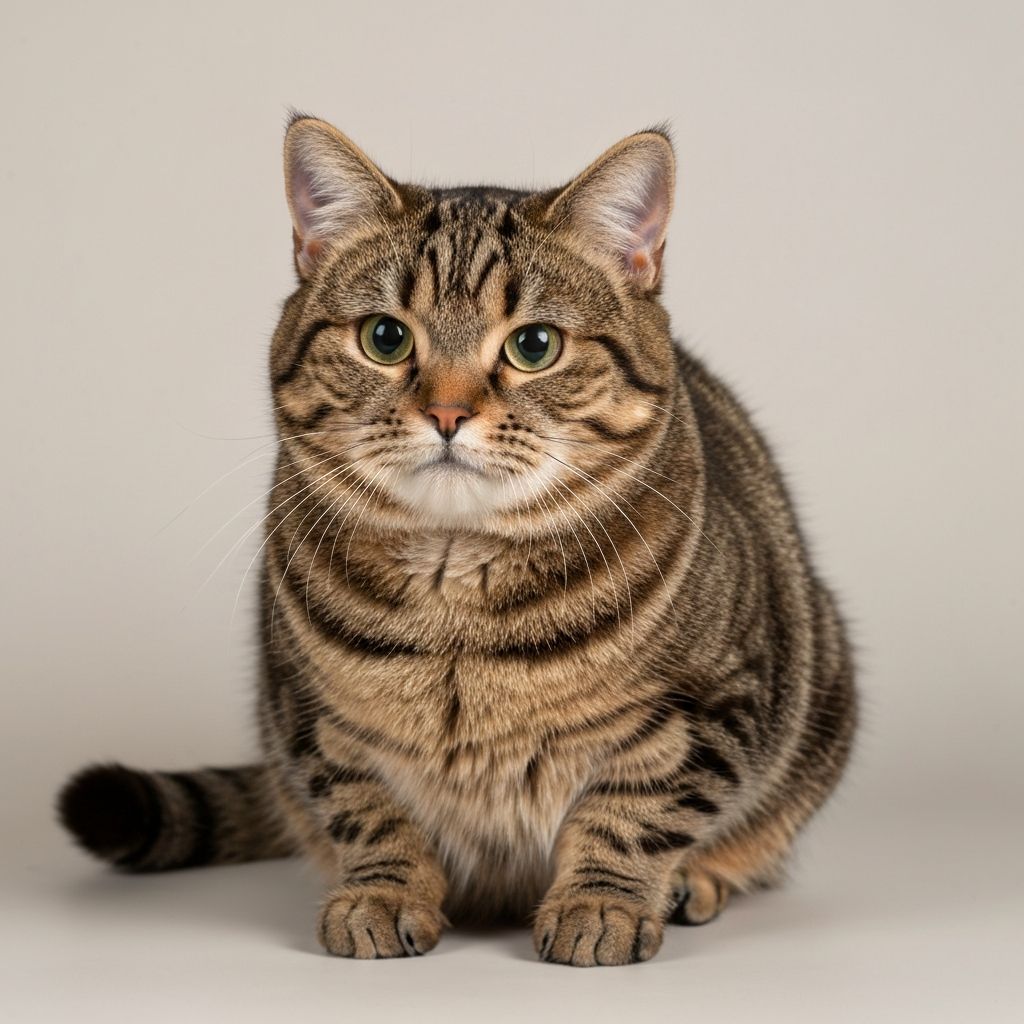
The Manx is the world's most famous tailless cat: round, compact, with a rabbit's hop and a dog's heart. It looks as if it lost its tail running after something more important — and that something turned out to be a human.
The Manx is the world's most recognizable cat, one that makes itself known not by what it has, but by what it lacks: a tail. Where in other cats the tail begins, in a true Manx there is only a slight hollow — a complete absence of a tail, in English described by the word rumpy. This is a round, compact cat of a surprisingly massive silhouette: a rounded back, a broad chest, and clearly longer hind legs than front ones, on account of which it moves with a characteristic, rabbit-like hop. This concise, circular build makes the Manx look like a living ball of fur — and like a cat that came from the hand of a designer with a very concrete, minimalist intention.
Where a cat without a tail came from is explained by two tales — one true, the other far funnier. The true one is geographical: the Manx comes from the Isle of Man in the Irish Sea, where on a small, cut-off scrap of land the natural mutation of taillessness had no way to disperse and, from generation to generation, fixed itself in the local cat population. And the funnier one is a local legend: it holds that the Manx simply arrived late for Noah's ark and caught its tail in the closing door when it jumped inside at the last moment. The islanders of Man tell it with disarming seriousness to this day — and it is no wonder, because it fits this cat perfectly: the Manx really does give the impression of having lost its tail running after something far more important.
That more important something turned out, as feline history has it, to be a human — because the Manx is one of the most dog-like cats there are. It attaches itself to the family with a devotion a dog would not be ashamed of: it follows its people from room to room, greets them at the door, and likes to be at the center of household life. Many Manx can be taught to play fetch and willingly play at retrieving toys, and some even have the dog-like habit of burying their treasures. Added to this is the heritage of generations of island hunters: the Manx is an excellent hunter with a lightning reflex, alert and intelligent, that uses its powerful hindquarters for surprisingly high and accurate jumps. This is a quick, devoted, and character-full cat — a companion in every inch.
Before you succumb to its charm, however, one must honestly speak of the other side of the same gene that took the Manx's tail. Taillessness in this breed comes from a mutation affecting the whole spine — and in some cats leads to the so-called Manx syndrome: developmental defects of the spine and spinal cord that can cause neurological problems and troubles with the intestines and bladder. Precisely for this reason, responsible breeding is here absolutely crucial: conscious breeders carefully pair the cats so as to minimize the risk, and when buying a kitten, one must choose only such places. This is a beautiful and wonderful cat — but a cat worth loving with full, open knowledge of what its health requires.
Precisely for this reason the Manx's bowl is one of the most important tools supporting its spine and joints:
- A lean weight is a priority: every extra kilogram is an extra burden for the sensitive spine and joints, which is why portion control is with the Manx more important than with an average cat
- Joint support: the breed is predisposed to arthritis with age, so omega-3 acids and supplements such as glucosamine and chondroitin are worth discussing with the vet appropriately early
- An easily digestible diet: because Manx syndrome can affect the intestines, in some cats a light, easily digestible diet supporting proper work of the digestive system works well
- Solid protein: the Manx's muscular, strongly built silhouette needs good, full-value protein to keep the mass in the muscles supporting the spine
- Fresh water always available, and wet food additionally supports hydration and the work of the intestines and bladder
Beyond the bowl, it is worth remembering a few matters important for this breed:
- A healthy spine day to day: the Manx is served well by gentle ascents and descents — low beds and ramps spare its back, especially in cats with symptoms of Manx syndrome
- Observation and examinations: it is worth paying attention to the manner of moving, urination, and defecation, and consulting any abnormalities with the vet — an early reaction can be crucial
- Joints in older age: in mature Manx, regular, moderate activity and a diet supporting the joints help preserve fitness longer
- Movement adapted to the cat: it is an agile jumper and hunter, but movement is best encouraged through play, not by forcing it into strenuous feats
- Closeness and company: the Manx is a family cat, attached, that feels best as a full-fledged participant in the daily life of the home
Because the Manx is proof that exceptionality and vulnerability often go hand in hand: an extraordinary, round, tailless cat with a dog's heart that needs a caretaker conscious both of its charm and of its needs.
Love it with open eyes — care for its weight, its spine, and a good breeder — and it will repay you the way only a Manx can: following you step by step for its whole life, faithful as the dog it, deep in its heart, partly is. Because this cat really did once lose a tail — but it looks as if in return it found a human. You.
Most common health issues
The same gene that produces the lack of a tail affects the development of the entire spine - in some cats it leads to spinal cord defects causing neurological problems as well as bowel and bladder issues. That is why responsible breeding is crucial. It is worth observing the way the cat moves and its urination and defecation, and consulting any abnormalities with a vet promptly.
A tendency to arthritis that worsens with age, causing stiffness and pain during movement. A lean weight is crucial (every extra kilogram burdens the joints), and omega-3 fatty acids as well as glucosamine and chondroitin support their condition. Gentle access points (ramps, low beds) make daily life easier for an older cat.
Health issues
2 most common conditions
Health issues
2 most common conditions
The same gene that produces the lack of a tail affects the development of the entire spine - in some cats it leads to spinal cord defects causing neurological problems as well as bowel and bladder issues. That is why responsible breeding is crucial. It is worth observing the way the cat moves and its urination and defecation, and consulting any abnormalities with a vet promptly.
A tendency to arthritis that worsens with age, causing stiffness and pain during movement. A lean weight is crucial (every extra kilogram burdens the joints), and omega-3 fatty acids as well as glucosamine and chondroitin support their condition. Gentle access points (ramps, low beds) make daily life easier for an older cat.
Nutritional needs
Cat hydration - why wet food matters
Cats naturally have a low thirst drive and often drink too little water. Their ancestors - desert cats - obtained water mainly from food. Wet food contains 70-80% water, which significantly supports hydration and helps prevent kidney and urinary tract problems.