Bichon Frisé
Origin: Spain / Belgium
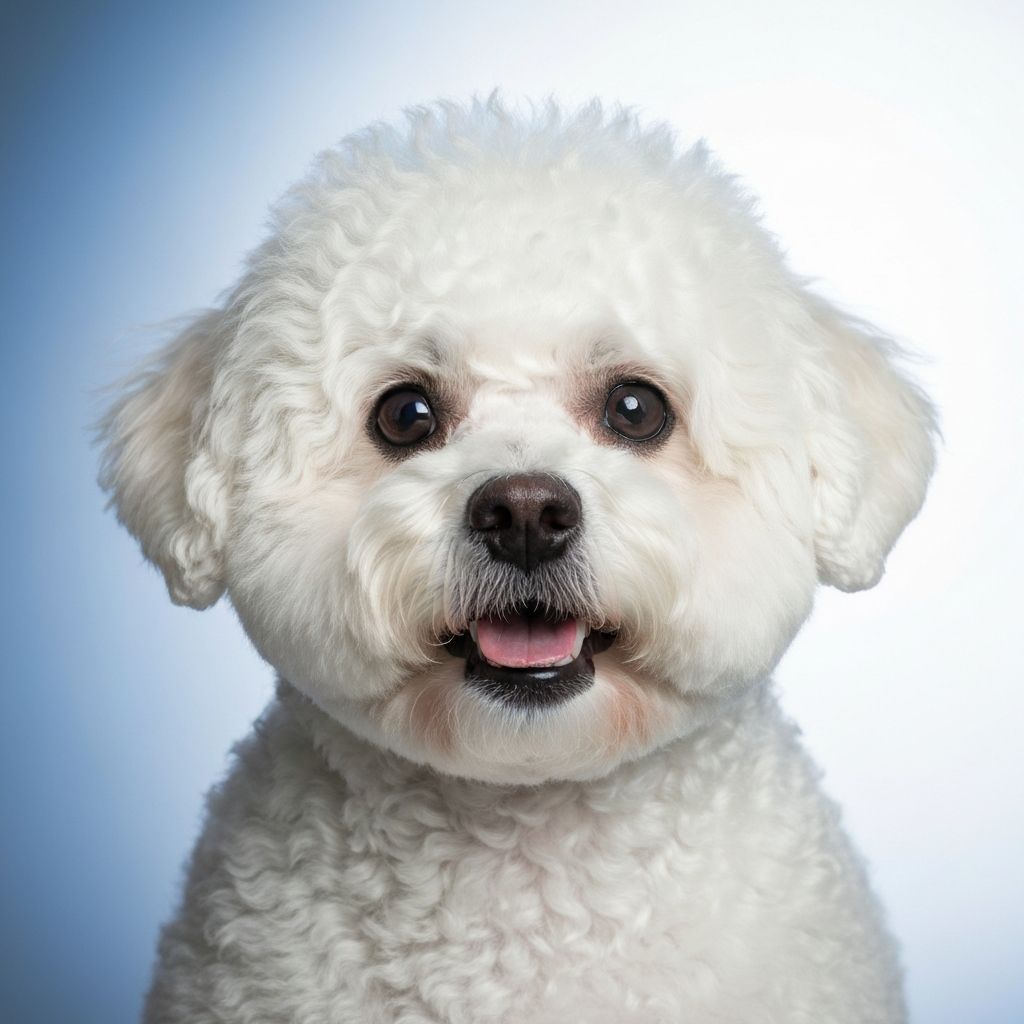
The Bichon Frisé is a small, white ball of good humor that made a dizzying career both at the royal court and in the circus — all thanks to one talent: an irresistible charm with which it can enchant absolutely anyone.
In the Bichon Frisé's biography there is something few dogs can boast of: this breed made a career both in the salons and under the circus dome — all thanks to one single talent. The Bichon simply charms. This small, snow-white dog with a soft, curly coat looks like a fluffy ball of good mood and works on its surroundings in exactly that way. Deriving from the Mediterranean, for centuries it was the pampered favorite of the European aristocracy — it happened that kings carried it around in a special basket, and painters seated it in court portraits. When, however, court fashion turned away, the Bichon did not fall into oblivion but masterfully made use of what it had: it took to the streets and under the tents, where thanks to charm and cunning it made a brilliant second career as a circus dog and companion of street performers. From the royal basket straight to the arena — and in neither of these worlds did it feel out of place.
Because charming is for the Bichon not so much a skill as a way of life — every creature it meets is in its eyes an audience that has just had the luck to come across it. It is indecently sociable and warm: it greets guests as if they had come specially for its performance, and the existence of a category called “stranger” it seems not to acknowledge at all, because after all every person is simply an admirer it has not yet had time to meet. It has, meanwhile, its showpiece number: out of nowhere, without warning and without an evident reason, it falls into a veritable frenzy of happiness and, squealing, whizzes in mad laps around the whole house, as if for a moment possessed by pure joy, after which it brakes just as suddenly — panting, proud of itself, and clearly awaiting an ovation. And once it has run out of strength and curled into a ball, it turns into the most endearing cuddly toy under the sun — on one condition, however: that you care for that striking, cotton-wool coat of its, because without regular grooming the fluffy little cloud instantly turns into a matted gray sponge that collects from the floor everything it encounters on its way.
And yet reducing the Bichon solely to the role of a charming jester would be doing it an injustice — because that unclouded cheerfulness of its grows from something far deeper than the mere desire to make people laugh. This dog simply lives for people. It is tender, sensitive, and so closely bonded with its family that it cannot bear loneliness and really wilts when left alone too long. All its charm, all the tricks and joyful frenzies, serve in essence one thing: being close to you and making you smile. The Bichon has a remarkable gift for sensing moods and can brighten the worst day with its very presence, pressing itself onto your lap at exactly the moment you need it most. All this circus of its is essentially love in its purest form — and since Bichons live even a dozen or more years, a dozen or more years of unbroken, warm, fluffy optimism move in under your roof.
This immaculate white can, however, be misleading, because in terms of health the Bichon is a rather delicate little dog — and its weaknesses are betrayed fastest by the skin and coat.
Diet therefore plays a leading role with it:
- A good-quality food, and if needed a hypoallergenic one or one with a limited ingredient list — Bichons are prone to skin allergies, which well-chosen food can clearly soothe
- Omega-3 fatty acids and healthy fats supporting the skin and keeping that white, curly coat in good condition
- Constant access to fresh water and a properly balanced diet — this is important, because the breed can be prone to bladder stones
- Small, measured portions and a hard heart toward begging, because with such a small build excess weight is easy to come by
Beyond diet, with the Bichon it is worth remembering a few matters typical of the breed:
- Skin and ears: regularly check the skin for irritation, and the hairy ears for infection — these are frequent weak points in this breed
- Urinary system: the tendency to bladder stones means it is worth reacting to difficulty urinating or its worrying appearance
- Teeth: in the small muzzle the teeth easily become covered in tartar, so regular oral hygiene is a necessity
- Knees and eyes: in the breed patellar luxation and eye diseases occur, which is why it is worth reacting to limping and checking the vision
The Bichon Frisé will not conquer the world with cunning or strength — its superpower is of an entirely different nature, but no less valuable at all: it can make the people around it simply feel lighter and merrier. It is a small, white artist of good humor that spent whole ages perfecting one art — making life more pleasant — and still performs it with unshakable enthusiasm.
Care for its sensitive skin, snowy coat, and small-dog health, surround it with the closeness it so craves, and do not leave it alone too long, and it will repay you with the merriest company one could dream of. Because the greatest trick of this little circus performer is not running in circles or making guests laugh. It lies in the fact that this fluffy ball can turn every ordinary day into a slightly better one — and does it every morning anew, through all the shared years, solely for you.
See also: Maltese, Havanese, Poodle
Most common health issues
An excessive immune system reaction to food or environmental allergens, causing itching, skin problems, or digestive issues. Identifying the trigger is key, often through an elimination diet. Foods with a limited number of ingredients and support with omega-3 fatty acids help calm the symptoms.
Formation of deposits in the urinary tract, which can hinder urination and promote infections. Warning signs include frequent, painful urination and blood in the urine. Constant access to fresh water, food supporting a proper urine pH, and more frequent walks reduce the risk.
The kneecap slipping out of its proper groove, causing the knee to momentarily "skip" or lock. Very common in small and miniature breeds. A symptom can be periodic tucking-up of a hind leg while running and sudden, brief lameness. A lean build takes pressure off the joints, while supporting the cartilage with omega-3 fatty acids and the right calcium level promote knee stability.
Health issues
3 most common conditions
Health issues
3 most common conditions
An excessive immune system reaction to food or environmental allergens, causing itching, skin problems, or digestive issues. Identifying the trigger is key, often through an elimination diet. Foods with a limited number of ingredients and support with omega-3 fatty acids help calm the symptoms.
Formation of deposits in the urinary tract, which can hinder urination and promote infections. Warning signs include frequent, painful urination and blood in the urine. Constant access to fresh water, food supporting a proper urine pH, and more frequent walks reduce the risk.
The kneecap slipping out of its proper groove, causing the knee to momentarily "skip" or lock. Very common in small and miniature breeds. A symptom can be periodic tucking-up of a hind leg while running and sudden, brief lameness. A lean build takes pressure off the joints, while supporting the cartilage with omega-3 fatty acids and the right calcium level promote knee stability.
Nutritional needs
Proper hydration for your dog
Proper hydration is essential for a dog's health. Dogs need constant access to fresh water, especially on hot days and after physical activity. Wet food can serve as an additional source of fluids.