Papillon
Origin: France/Belgium
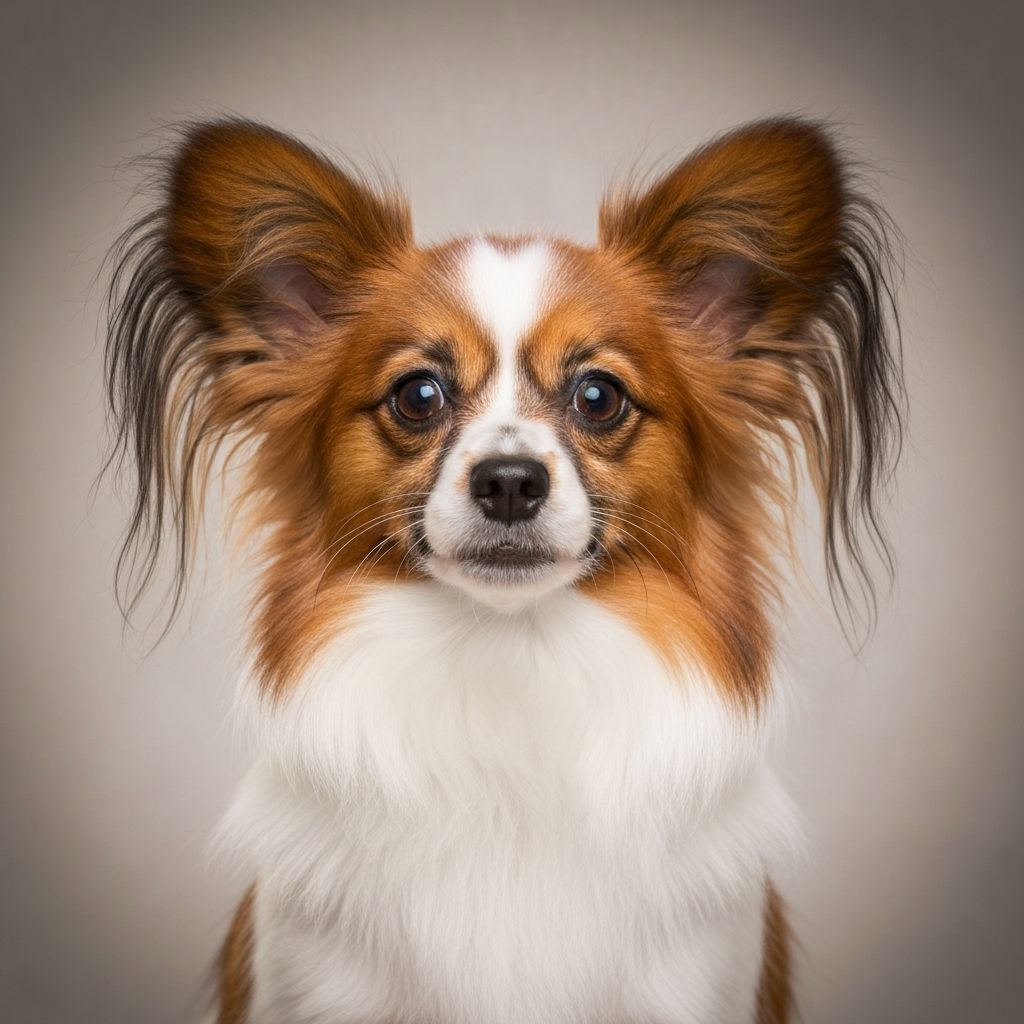
The Papillon looks like a delicate, butterfly-like ornament made for a silk cushion — and is in reality one of the smartest and most athletic dogs in the world.
It is hard to find a dog whose appearance misleads quite so effectively. Everything about the Papillon — the great, fringed ears spread like a butterfly's wings (hence the name, since papillon is French for “butterfly”), the silky coat, and the courtly pedigree — screams: a delicate ornament for holding on a velvet cushion. For centuries it was, indeed, treated exactly that way: Papillons were pampered at European courts, seated on the laps of ladies and queens, and immortalized in Renaissance portraits as living jewels. This whole picture has, however, one small flaw — it is completely untrue. Because in this filigree, butterfly-like packaging is housed the mind and temperament of a true dog for special assignments.
Let us start with the size of the intellect, because in the Papillon it is truly un-butterfly-like. The breed ranks among the very top of canine intelligence, right next to shepherds and border collies — with the small difference that the Papillon holds this place while measuring barely twenty-some centimeters at the withers. It masters a new trick before you have managed to properly explain what you mean; if you hide treats behind a cabinet door, you can take it for granted that it worked this out long ago and is merely waiting for a favorable opportunity; and when it is bored, this brilliant mind gets to work and invents entertainments that rarely accord with the household rules. The second surprise sits in the body: this two-, three-kilogram little one is a tireless athlete that whizzes around agility courses so that larger rivals can only watch its tail, runs without a trace of breathlessness routes that would shame many a large dog, and does not for a moment give the impression of being aware that it should theoretically be fragile. Offer it a velvet cushion, and it will look at you with an expression saying that yes, it will gladly make use of it — right after it returns from a proper, long adventure.
And now the most important thing, because the Papillon directs all this above-average intellect in one very concrete direction: toward its human. This is not a dog that will be content with lying on a lap and receiving tenderness — the Papillon wants to be your partner. It looks into your eyes and really reads what mood you are in; it learns your rituals and senses that you are getting ready to leave before you even reach for the keys; it offers a paw, absorbs new words, and solves puzzles not for the reward itself, but because doing something together with you is for it the best form of closeness it knows. Such love — attentive, engaged, sincerely curious about you — has an exceptional depth to it. And since Papillons live in health and cheerfulness even a dozen or more years, this brilliant little partner stays with you for a long time — for whole chapters of life you will go through side by side.
Such unexpected energy in such a small body has its requirements, which are best seen at the bowl — the Papillon burns far more than its size would suggest.
Its diet therefore looks different from the menu of a couch pet:
- A high-quality food rich in full-value protein — it is fuel for its sporty, ever-working nature
- Small but substantial and calorie-dense portions — with such a small stomach, nutritional density counts, not volume
- More frequent meals, especially in puppies — as a miniature and on top of that very active breed, Papillons can be prone to sugar drops (hypoglycemia)
- Dry food or treats that support the wearing-away of tartar, which help protect the small, crowded little teeth
Beyond diet, with the Papillon it is worth remembering a few matters typical of small breeds:
- Teeth: in the small muzzle the teeth easily become crowded and covered in tartar — regular oral hygiene is a must with this breed
- Knees: in Papillons patellar luxation occurs, which is why it is worth reacting to “skipping” in a hind leg or periodic limping
- Eyes: in the breed progressive retinal atrophy (PRA) and other vision defects occur, so periodic ophthalmic checkups are valuable
- Small build: the tiny body requires caution with jumps from a height, and in puppies it is worth remembering the delicacy of the skull
Few dogs can mislead with a first impression as effectively as the Papillon — and few reward you as generously for seeing through this charming masquerade. Sharpness, energy, courage, and tenderness are contained within it in amounts that would shame a dog five times its size — on one condition, however: that you treat it in accordance with who it really is. Not a fragile little ornament, but a wise, sporty companion that craves movement, challenges, and your company.
Give it occupation for that nimble head, a portion of movement worthy of its heart, and plenty of joint activity, and it will repay you with years of brilliant, joyful friendship. Because the Papillon, for all its butterfly delicacy, does not dream of a silk cushion at all. It dreams of being by you, thinking together with you, and living through at your side every adventure these long shared years bring — and it is hard to find a more beautiful companion for this journey than a small butterfly that, of all the places in the world, chose precisely to fly right beside you.
See also: Chihuahua, Cavalier King Charles Spaniel, Pomeranian
Most common health issues
The kneecap slipping out of its proper groove, causing the knee to momentarily "skip" or lock. Very common in small and miniature breeds. A symptom can be periodic tucking-up of a hind leg while running and sudden, brief lameness. A lean build takes pressure off the joints, while supporting the cartilage with omega-3 fatty acids and the right calcium level promote knee stability.
A hereditary eye disease in which the retina gradually loses function, leading to worsening eyesight — first after dark. It doesn't hurt, so the first sign is often the dog's uncertainty in the dark and bumping into objects. Antioxidants and omega-3 fatty acids support eye health (though they don't stop the disease); keeping the furniture in fixed positions at home helps.
Health issues
2 most common conditions
Health issues
2 most common conditions
The kneecap slipping out of its proper groove, causing the knee to momentarily "skip" or lock. Very common in small and miniature breeds. A symptom can be periodic tucking-up of a hind leg while running and sudden, brief lameness. A lean build takes pressure off the joints, while supporting the cartilage with omega-3 fatty acids and the right calcium level promote knee stability.
A hereditary eye disease in which the retina gradually loses function, leading to worsening eyesight — first after dark. It doesn't hurt, so the first sign is often the dog's uncertainty in the dark and bumping into objects. Antioxidants and omega-3 fatty acids support eye health (though they don't stop the disease); keeping the furniture in fixed positions at home helps.
Nutritional needs
Proper hydration for your dog
Proper hydration is essential for a dog's health. Dogs need constant access to fresh water, especially on hot days and after physical activity. Wet food can serve as an additional source of fluids.