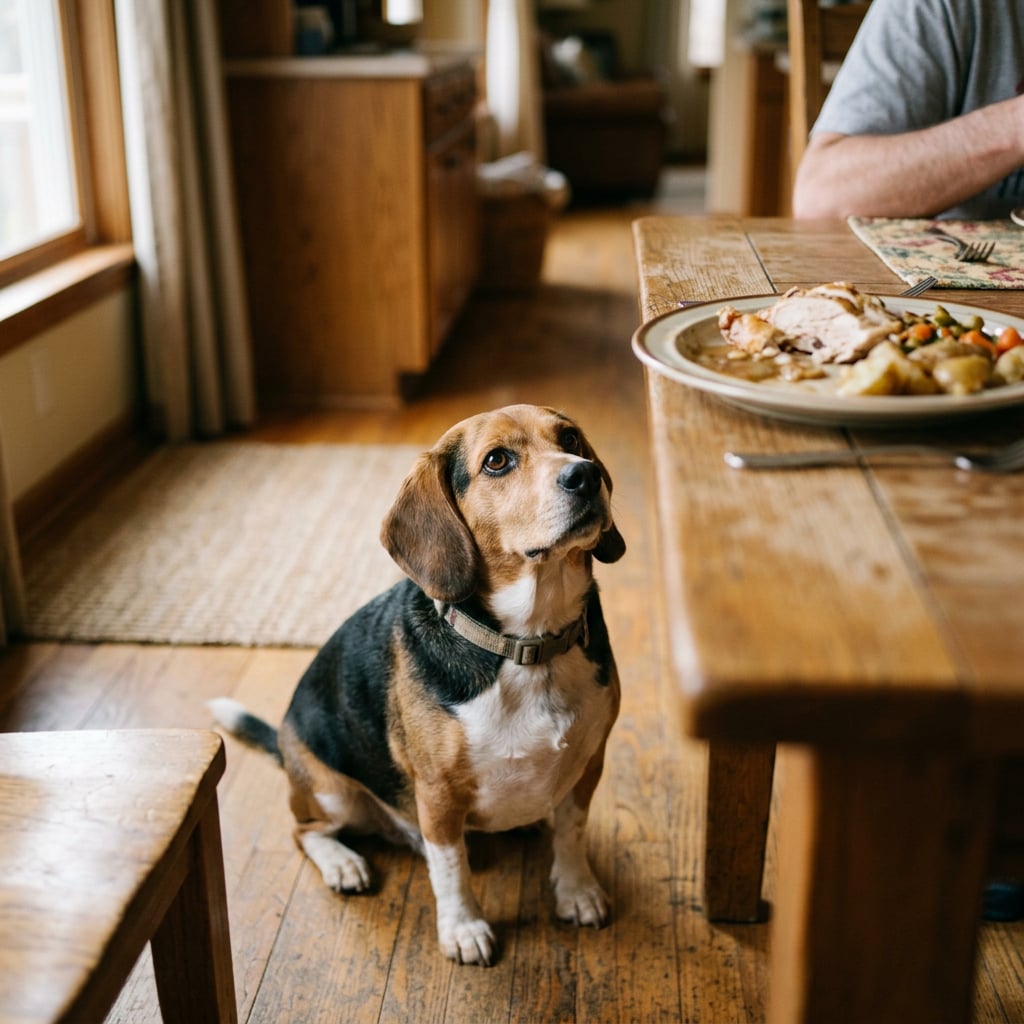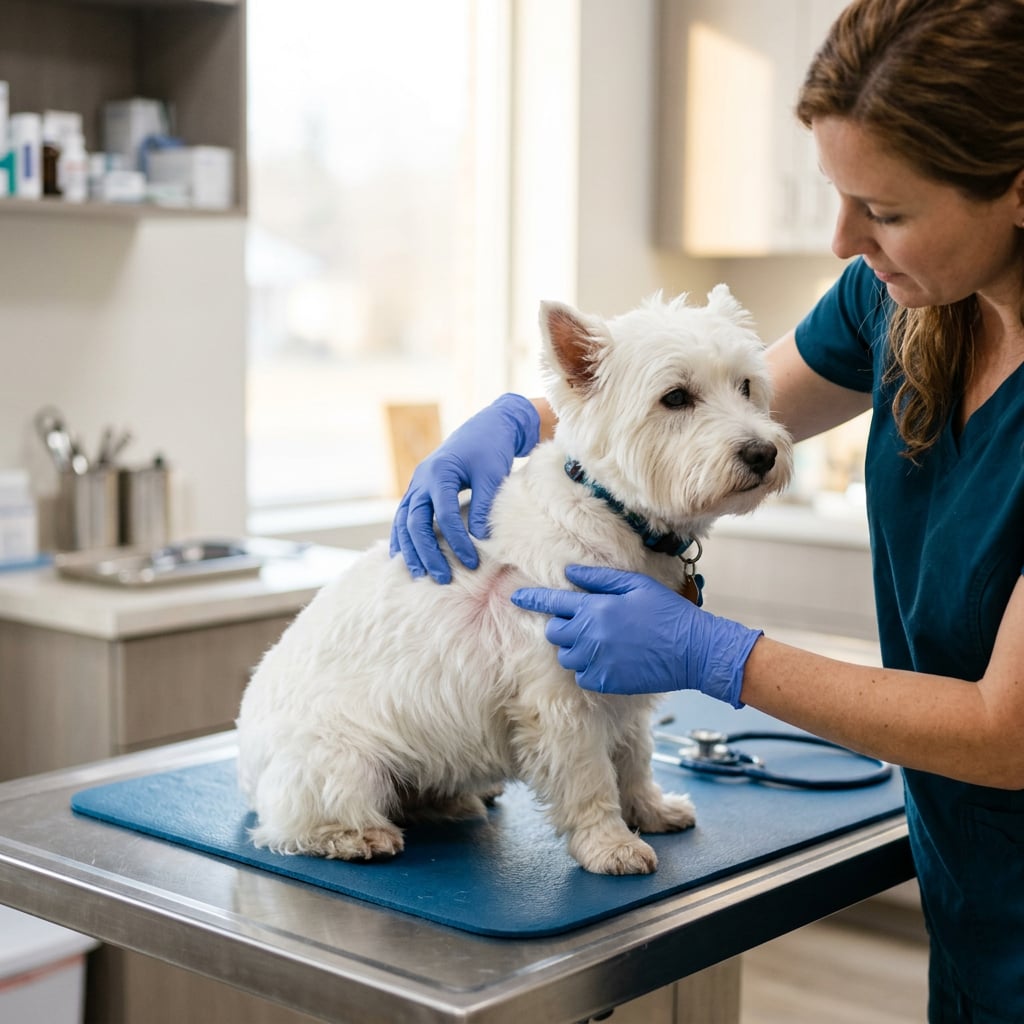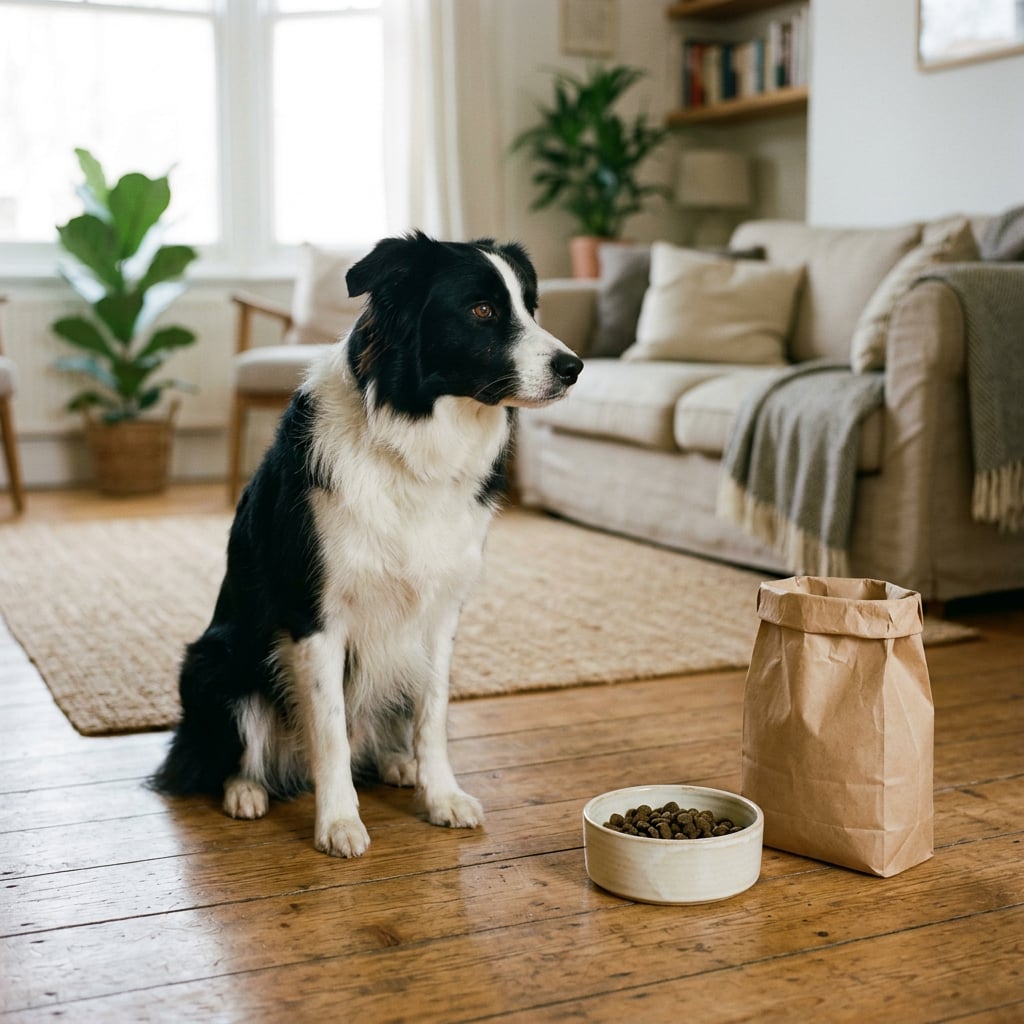
You are standing in a pet shop. Thirty bags in front of you. One has a wolf in a winter forest, another says "HOLISTIC", a third says "rich in meat" — although it contains 12% of it. Prices run from 40 to 400 zł for the same 12-kilo bag. Your dog is waiting at home and couldn't care less which one you pick, because he will eat anything, including your slipper.
Sound familiar? It isn't your fault. The pet food market was designed so that you can't make an informed decision.
This guide is meant to change that. No marketing fog, no scaremongering, no "natural ingredients" (arsenic is natural too). Just the specifics: what counts, what doesn't count at all, and how to check in five minutes whether the food you've been buying for three years is a good choice.
Why this really matters (and no, this is not a sales pitch)
A dog eats the same food twice a day for ten, twelve, sometimes fifteen years. No other factor in his life works with that kind of consistency. Not walks, not toys, not his bed. The bowl.
Diet affects things you can see with the naked eye:
- coat and skin — a dull, greasy coat or constant scratching is often the first sign that something is wrong in the bowl, not at the dermatologist's;
- energy — a dog on a well-chosen food has steady energy, not "frenzy, then coma" swings after a meal;
- digestion — regular, well-formed stools are a dull topic at parties, but the best indicator you get for free, twice a day;
- weight — which translates directly into joints, heart and lifespan. Research on calorie restriction in Labradors showed a difference in lifespan measured in years, not months;
- immunity and ageing — a well-fed dog enters his senior years more gently.
That sounds like a lot of responsibility for one bag. It is.
What manufacturers don't tell you outright
Before we get to choosing, three truths that will save you a lot of money.
First: price is not a measure of quality. It is a measure of the marketing budget. There are foods at 90 zł per 12 kg with a better composition than ones at 250 zł. There are also 250 zł foods that are worth it. Only the composition will tell you — not the packaging.
Second: "grain-free" doesn't mean "better". It only means "without grains". In many foods the grains have been replaced with peas, lentils and potatoes — sometimes in quantities that turn a meat-based food into a legume-based one. The FDA spent years investigating a potential link between grain-free diets rich in legumes and dilated cardiomyopathy in dogs. The matter isn't closed, but the absence of grains is certainly not an automatic advantage.
Third: a dog is not a wolf. The two parted ways some 15–30 thousand years ago, and in that time the dog acquired several times more copies of the gene responsible for digesting starch. Your pug doesn't need his ancestors' diet. He needs a diet that suits him.
Composition: where to actually look
If you remember one thing from this guide, make it this: read the first three items in the composition and the "analytical constituents" table. The rest of the label is a book cover.
The first three ingredients
Ingredients are listed in descending order of weight. What should worry you and what should please you:
Looks good: "chicken meat (28%)", "dried lamb meat (30%)" — a specific animal, a specific percentage.
Worse: "meat and animal derivatives (min. 4% chicken)" — meaning 96% of it is unknown.
Watch out for the fresh-meat trick. "Fresh chicken 40%" sounds excellent, but fresh meat is about 70% water, which evaporates during production. Of that 40% fresh chicken, roughly 12% remains in the finished kibble. Dried meat (meal) is already dehydrated, so 30% meal is in reality more animal protein than 40% fresh meat. Manufacturers know this. They are counting on you not knowing.
Analytical constituents — four numbers that tell the truth
| Parameter | Dry food for an adult dog | What it tells you |
|---|---|---|
| Protein | approx. 22–32% | Building material. Too little = muscle loss; too much without need = a burden |
| Fat | approx. 10–20% | Energy and coat. A working dog needs more, a couch dog less |
| Crude fibre | approx. 2–5% | Above 6–7% often means "filler" |
| Crude ash | below about 8–9% | High ash can signal a large share of bone-based raw materials |
These ranges are a starting point, not dogma — a puppy, a pregnant bitch and a twelve-year-old senior have different needs.
The number that settles everything: kcal per 100 g
Here is the dirty secret of comparing foods: food A at 80 zł can end up more expensive than food B at 120 zł. If A has 320 kcal/100 g and B has 420 kcal/100 g, you have to feed a much larger portion of A. The bag disappears faster. The real cost is counted not per kilogram but per day of feeding.
This is exactly the calculation nobody wants to do by hand — which is why we built the Purrtner portion calculator. You enter breed, age, weight and activity, choose a food, and get the daily amount in grams, the calories and how many days the pack will last.
Dry, wet, mixed — which to choose
Dry food
It wins on convenience and price per calorie. It is easy to measure, keeps well once opened and is cheaper per unit of energy. The downside: about 8–10% water, so the dog has to drink more. The myth that kibble "cleans teeth" is heavily exaggerated — kibble shatters on first contact with a tooth and won't replace brushing.
Wet food
70–80% water, which is an advantage for dogs that drink little, for seniors and for animals with kidney or urinary problems. Usually more palatable — a lifesaver with fussy eaters. Downsides: more expensive per calorie, and once opened it has to go in the fridge and be used within 1–2 days.
A mix — most often the most sensible
In practice this model works well: dry as the base (70–80% of calories) plus wet as an addition (20–30%). You get the convenience and price of dry food along with the hydration and appeal of wet.
One important caveat: when mixing, you have to count calories, not "half and half by eye". This is the most common route to overfeeding without noticing. The Purrtner calculator has a mix mode — it shows how many grams of each food per day so that the total adds up.
How to match food to a specific dog
There is no "best dog food". There is the best food for your dog.
A puppy is growing and needs more protein, more energy and precisely balanced calcium and phosphorus — in large breeds, growing too fast genuinely harms the joints. "Large-breed puppy" food is not a marketing gimmick; it is a different recipe.
An active adult dog needs more fat as fuel. A couch-dwelling adult needs less than the table on the bag says.
A senior has a slower metabolism and often less muscle. The paradox: he needs fewer calories but not less protein — cutting a senior's protein "just in case" is one of the more common mistakes.
Breed matters too, and in concrete ways: dachshunds and their spines, bulldogs and their breathing, shepherds and their hips, Maine Coons and their hearts. For a predisposed animal, every extra kilogram is a real load on the weak spot. In the Purrtner breed catalogue you will find health profiles and feeding tips for more than seventy breeds.
A dog with a health problem — allergy, kidney disease, urinary stones, diabetes — is not territory for experiments from blogs. Including this one. A veterinary diet chosen by a vet.
Changing food: how not to give your dog a weekend in the bathroom
The most common mistake in the world: the bag runs out, you buy a new one, you pour it in. In the evening you are cleaning up.
A dog's digestive tract has its own bacterial flora used to a specific composition. A sudden change means diarrhoea, bloating and a dog looking at you reproachfully.
Do it over 7–10 days:
- days 1–3: 75% old food + 25% new
- days 4–6: 50% + 50%
- days 7–9: 25% old + 75% new
- day 10: new food only
With sensitive dogs, stretch this to two weeks. If loose stools appear along the way, go back one stage and stay there longer.
Five mistakes almost everyone makes
- Feeding "by eye" — a cup is not a measure. Studies of how people measure food show a spread of tens of percent in both directions. For a small dog that is the difference between a lean figure and obesity.
- Following the table on the bag without thinking — the tables are averaged for a dog of average activity. Your neutered couch potato really needs less.
- Treats left out of the calorie budget — three chews a day can add 20–30% of a small dog's daily requirement.
- Changing food with every bag — "for variety". A dog doesn't need variety in the sense that you do. He needs stability.
- Not weighing the dog — weight changes slowly and imperceptibly. Weighing once a month catches the trend before it becomes a problem.
Frequently asked questions
Is more expensive food better? Not always. Price also reflects the cost of marketing and the margin. What decides is composition, calorie content and how the dog looks on it after a few weeks.
How much food per day for a dog? It depends on weight, age, activity and the calorie content of the particular food — there is no honest way to give a single number. The Purrtner calculator works it out from your dog's data.
Can I mix dry with wet? Yes, it's a good model — provided you count calories from both rather than adding wet food "on top".
Can a dog eat the same thing every day? Yes, if the food is complete and well chosen. Dogs don't experience culinary boredom the way we do.
How will I know the food suits him? Shiny coat, skin without irritation, formed and regular stools, stable weight, steady energy. Give a food 6–8 weeks before you judge.
What to do now — specifically
- Pick up the bag you have at home. Check the first three ingredients and the kcal/100 g.
- Weigh your dog. Write it down.
- Work out the real portion — with the calculator, not a cup.
- Check what a day of feeding actually costs you and whether you are overpaying — the Purrtner price comparison shows the lowest price for the same food.
- If you are changing food — spread it over 7–10 days.
Your dog won't read this article and won't say thank you. He will simply have, for years to come, a shiny coat, working joints and the energy to go wild on the beach when other dogs his age are already sitting down.
That is thanks enough.
Purrtner is free. Calculator, price comparison, breed catalogue and reminders when the food is running low — no fees and no premium account. Set a free reminder and we will write to you before the bag runs out — with the daily amount and the cheapest offer.