Chow Chow
Origin: China
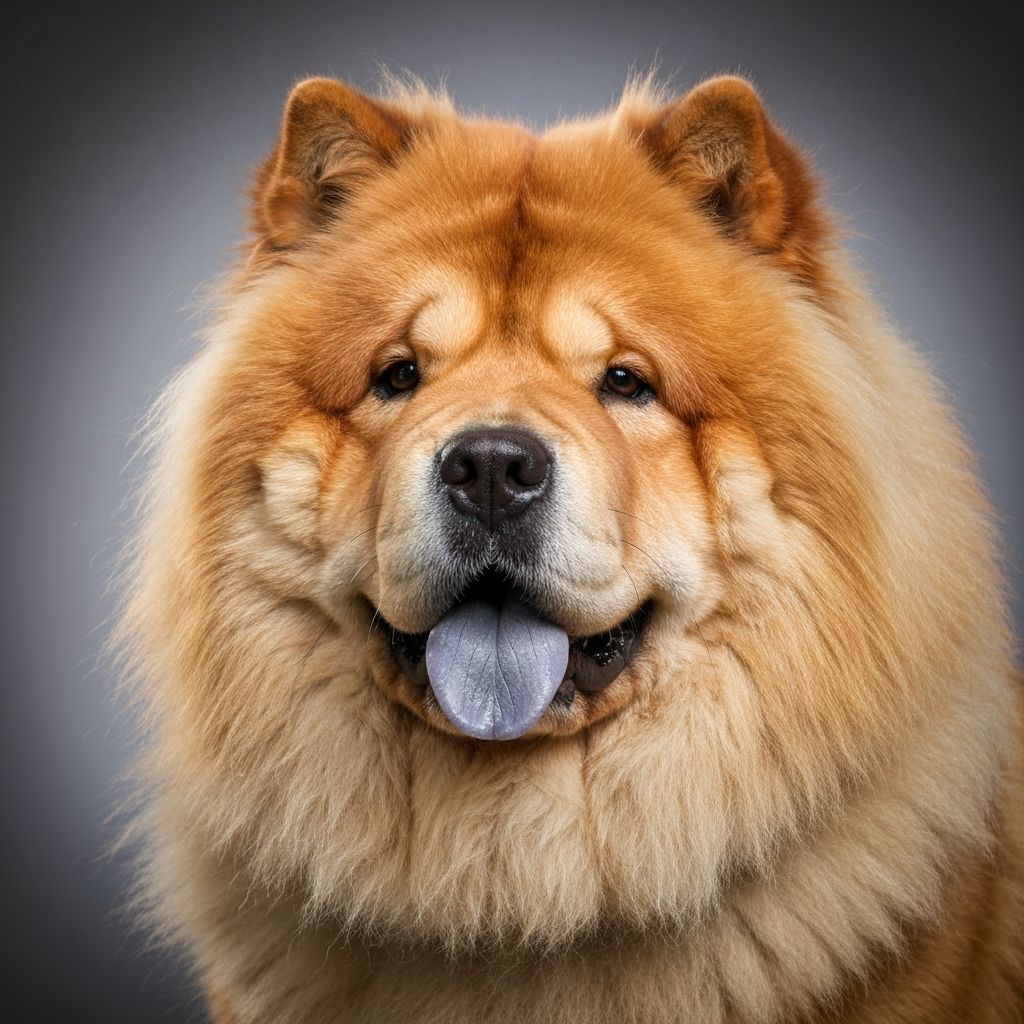
The Chow Chow looks like a cross between a teddy bear and a miniature lion, and inside is a dignified, independent cat that reserves love and tenderness for one, carefully chosen person.
The Chow Chow looks exactly as if someone took a teddy bear, added a lion's mane, and endowed it with the facial expression of a perpetually slightly dissatisfied aristocrat — and this one image says almost everything about it. This is one of the oldest breeds in the world, counting in China well over two thousand years, where it was prized as a guard, draft, and court dog; the lush mane around the head to this day gives it a leonine, dignified appearance, for which it is sometimes called the lion-dog. It also has a certain secret hidden in its mouth: a blue-black tongue, an oddity that in the canine world it shares with only a few breeds. Except that the greatest surprise awaits those who, at the sight of this fluffy lion, expect a living cuddly toy — because the Chow Chow behaves completely differently than its appearance would suggest. It behaves like a cat.
And a cat in the most dignified, imperious edition. The Chow is independent, calm, and full of reserve — it itself decides when and to whom it is permitted to touch it, and it dispenses its tenderness with the deliberation of a monarch handing out medals. It can come, accept exactly as much petting as it deems appropriate at the moment, and then get up and walk away in the very middle of the stroking, apparently having deemed the audience concluded. Toward strangers it can be cool and distrustful, and it has its opinion on every subject and does not intend to consult it with anyone. It moves, meanwhile, in a manner as characteristic as the rest of its person: because of its straightened hind legs the Chow's gait is stiff and a bit angular, so the dog does not so much walk across the room as dignifiedly stride through it, as if it were about to receive an honorary badge at any moment. And despite all this seriousness it is impeccably clean and almost devoid of doggy smell — because tidiness, of course, also befits someone of its stature.
All this aristocratic haughtiness has, however, its other face — and it is precisely this that makes the Chow truly exceptional. When this dog does grant someone its affection, it does so with a strength and depth hard to expect of it. The Chow usually chooses one person for itself — its human — and to them it gives a faithfulness that is quiet, lifelong, and absolute, treating the rest of the world with polite distance. It is not a dog that loves easily and everyone equally; it is a dog that loves rarely, but with its whole self. And it is precisely for this reason that winning a Chow's heart can be one of the most satisfying feelings a dog can give — because it resembles the moment when a proud, self-sufficient cat of its own will chooses you in particular and recognizes you as the only person in the world beside whom it is worth lowering its guard. It is a love you have to earn — and once you receive it, another equally loyal is hard to find.
Keeping this leonine majesty in good form requires a thoughtful diet, because the Chow's body has a few tender points.
Above all, that magnificent mane and dense undercoat need solid support from within:
- Full-value protein and omega-3 fatty acids and healthy fats — they nourish the skin and keep that impressive, double coat in full glory
- A lean silhouette and controlled portions — the Chow is a low-activity dog with a slow metabolism, so it gains weight easily, and every excess kilogram burdens its joints
- Meals divided into smaller portions and calm around the bowl — a deep chest means a risk of gastric torsion
- A good-quality food matched to the lifestyle of a calm dignitary, not a tireless athlete
Beyond diet, the Chow Chow requires attentive care for a few sensitive points:
- Eyes: in the breed entropion, that is, the inward folding of the eyelid, often occurs, which irritates the eyeball and requires a vet's reaction — all the more so since the lush fur around the eyes already limits the field of vision
- Joints: hip dysplasia is a real risk, in which a lean weight and sensible movement help greatly
- Heat: the dense, double coat means the Chow tolerates heat poorly — on hot days it needs coolness, shade, and calm
- Thyroid and stomach: it is worth remembering the tendency toward hypothyroidism and knowing the symptoms of gastric torsion, which requires immediate help
The Chow Chow is not a dog that will throw itself at your feet and court your favor — and it is precisely this pride that constitutes part of its remarkable charm. It is a dignified loner with leonine majesty and a feline soul, that does not pretend to be someone it is not and does not grant itself to random people.
Care for its magnificent coat, joints, coolness, and weight, respect its independence, and give it time to decide for itself to let you in — and once it does, you will understand why the people to whom the Chow has given its heart speak of it with such emotion. Because to be chosen by this dignity-filled lion in a dog's skin is a little like the most unattainable creature under the sun looking over the whole world and then quietly deciding that of all people it is precisely beside you that it wants to lay its proud head.
See also: Akita Inu, Shar Pei, Samoyed
Most common health issues
A congenital abnormality in which the head of the femur does not fit perfectly into the socket, over time leading to joint degeneration and pain. It mainly affects large and giant breeds, though it can occur in small ones too. Watch for reluctance to jump, a "bunny-hopping" gait, and stiffness after rest. A lean build and controlled exercise take pressure off the hips, while omega-3 fatty acids support the cartilage.
Inward folding of the eyelid margin, causing the lashes to irritate the eyeball, resulting in tearing, squinting, and a risk of corneal damage. It's worth reacting to persistent tearing and redness of the eye. A diet rich in antioxidants supports eye health, though the folding itself is corrected surgically.
Sudden distension and twisting of the stomach; a directly life-threatening condition requiring immediate veterinary care. The risk rises in large breeds with a deep chest. Warning signs include unproductive attempts to vomit, a bloated belly, and restlessness. It helps to split the daily portion into 2-3 smaller meals and to avoid intense exertion right after eating.
Insufficient production of thyroid hormones, which slows the metabolism. Typical signs are weight gain despite appetite, lethargy, hair loss, and dry skin; it is diagnosed with a blood test. Once stabilized with treatment, a diet with controlled calorie content and coat support with omega-3 fatty acids help.
Health issues
4 most common conditions
Health issues
4 most common conditions
A congenital abnormality in which the head of the femur does not fit perfectly into the socket, over time leading to joint degeneration and pain. It mainly affects large and giant breeds, though it can occur in small ones too. Watch for reluctance to jump, a "bunny-hopping" gait, and stiffness after rest. A lean build and controlled exercise take pressure off the hips, while omega-3 fatty acids support the cartilage.
Inward folding of the eyelid margin, causing the lashes to irritate the eyeball, resulting in tearing, squinting, and a risk of corneal damage. It's worth reacting to persistent tearing and redness of the eye. A diet rich in antioxidants supports eye health, though the folding itself is corrected surgically.
Sudden distension and twisting of the stomach; a directly life-threatening condition requiring immediate veterinary care. The risk rises in large breeds with a deep chest. Warning signs include unproductive attempts to vomit, a bloated belly, and restlessness. It helps to split the daily portion into 2-3 smaller meals and to avoid intense exertion right after eating.
Insufficient production of thyroid hormones, which slows the metabolism. Typical signs are weight gain despite appetite, lethargy, hair loss, and dry skin; it is diagnosed with a blood test. Once stabilized with treatment, a diet with controlled calorie content and coat support with omega-3 fatty acids help.
Nutritional needs
Proper hydration for your dog
Proper hydration is essential for a dog's health. Dogs need constant access to fresh water, especially on hot days and after physical activity. Wet food can serve as an additional source of fluids.