Samoyed
Origin: Russia (Siberia)
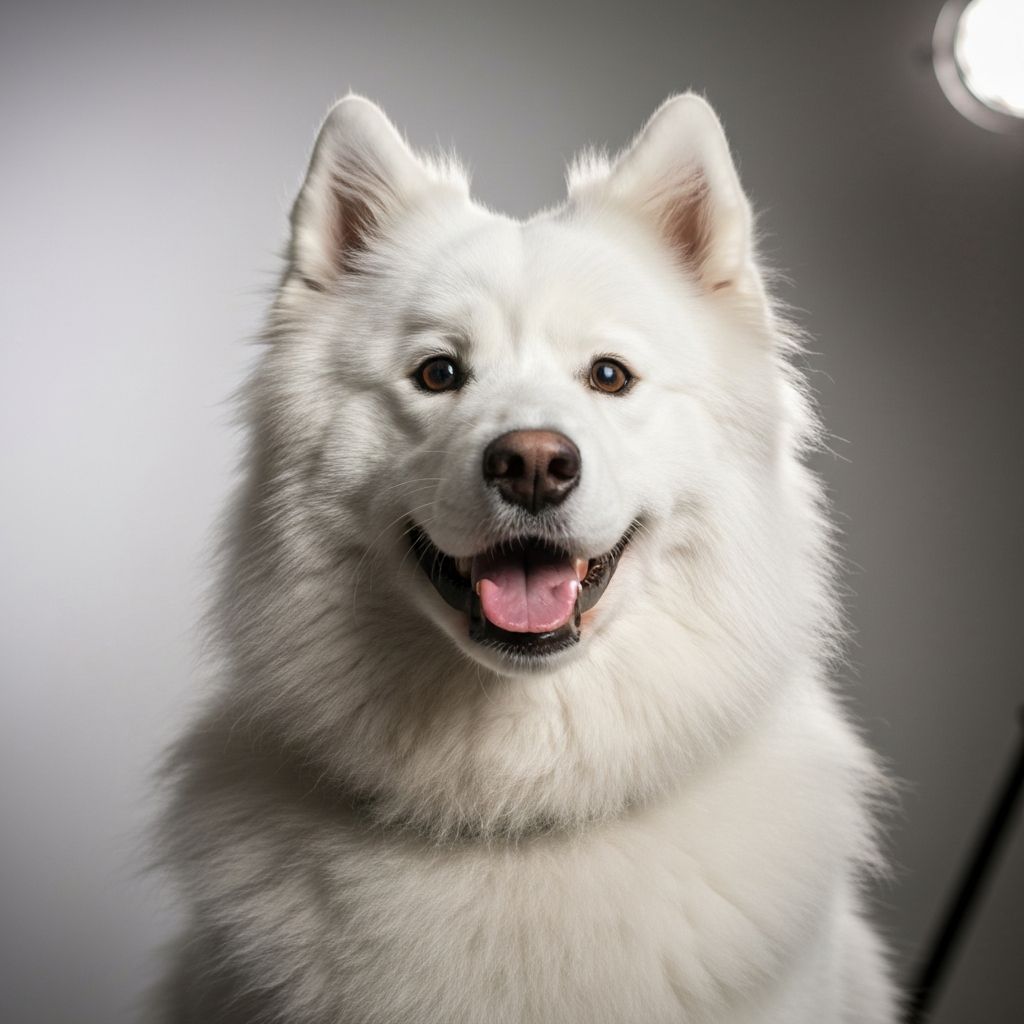
The Samoyed is a walking cloud in perpetual good humor — a snow-white Arctic dog whose famous smile is the most sincere thing in the world, and whose heart was made for one thing: being as close to people as possible.
The Samoyed is one of those dogs at whose sight people involuntarily smile — because it is hard not to answer with a smile to someone who smiles their whole life long. This snow-white, fluffy cloud comes from frosty Siberia, where for centuries it accompanied the nomadic people of the Samoyeds. And here lies the secret that explains this breed's whole nature: Samoyeds were not dogs kept at a distance, on a tether or in a kennel. Yes, they pulled sleds and helped with the reindeer herds — but above all they slept together with the family, nestled into people and children, warming them with their bodies through the Arctic nights. In other words: this dog was literally bred to be as close to a human as possible. And its famous “smile” — the very slightly raised corners of the muzzle — is not only charm. It is also a practical trait: it prevents drool from running and icicles from forming in the frost. Nature thus saw to it that the Samoyed is smiling even when no one is watching.
From this history comes the character that makes the Samoyed one of the most cheerful dogs on earth. It is an incorrigible optimist and a social creature to the marrow — the Samoyed loves people, all of them, without exception, with an enthusiasm that would shame the most effusive host. As a guard dog it is therefore a complete disaster: at the sight of a burglar it will most likely start wagging its tail joyfully and proudly give them a tour of the house, showing where you keep the best things. It also has two traits every future owner must be warned of. First, the coat: this wonderful cloud sheds abundantly and without respite, so white hair will become your new, permanent addition to your clothes, the couch, and periodically the plate too. Second, the Samoyed very much likes to talk — it can sing, murmur, and deliver long, melodious speeches, especially when it has something important to communicate to you. And the most important thing to communicate is usually that it has just felt slightly left out.
And it is precisely this “feeling left out” that leads us to the very heart of this breed. Because the Samoyed, despite all its cheerfulness and independent, Arctic spirit, is a dog that simply cannot and does not want to live far from its people. This is not a dog for the garden or for being alone — for thousands of years it shared with humans literally every breath and every sleep, and this need for closeness has stayed deep in its genes. The Samoyed wants to be at the very center of the family: to take part in everything, to lie wherever everyone is, and to warm your life with that inexhaustible warmth of its — this time no longer against the frost, but against everything gray and sad. And there is something truly beautiful in this: to love a Samoyed is to have in the home a piece of living sunshine that every morning greets you with the same, unchanging smile, as if the sight of you were the best thing that could happen to it that day.
This impressive cloud of fur covers a fit, energetic dog, and its diet must serve both the movement and that famous coat:
- Full-value, good-quality protein — it builds muscle and nourishes the dense, double coat the Samoyed is famous for
- Omega-3 fatty acids and healthy fats supporting the skin and the beautiful, glossy “coat” of this breed
- Energy matched to its high activity — this is a dog for movement, not for lying around, and its bowl should reflect that
- A lean silhouette and measured portions, to protect the joints and keep it in form worthy of a sled dog
It is also worth remembering a few health matters important for this breed:
- Eyes: in Samoyeds progressive retinal atrophy (PRA) and other vision defects occur — periodic ophthalmic checkups are valuable
- Joints: as in many medium and larger breeds, prevention of hip dysplasia, a lean weight, and sensible movement are important
- Hereditary predispositions: in this breed, among others, kidney disorders occur — it is worth choosing puppies from tested lines and regularly monitoring health at the vet
- Coat and overheating: the dense fur requires regular brushing, and in heat the Samoyed needs coolness — this coat protects it from cold but makes releasing heat difficult
Because the Samoyed is something more than an exceptionally good-looking dog — it is walking good humor, woven from snow, warmth, and boundless love for people. It is a breed that will not endure loneliness, but in return for your presence and engagement will repay you with a joy so contagious that it changes the atmosphere of the whole home.
In return for plenty of movement, family closeness, a good diet for that magnificent coat, and regular grooming, you will get a companion that for a dozen or more years will carry that indestructible smile of its for you. Because the Samoyed still remembers what it came into the world for — not to sleep alone under the stars, but to lie nestled into its people and warm their lives. And if you let it do exactly that, you will become for it its whole sun-filled world.
See also: Siberian Husky, German Spitz, White Swiss Shepherd
Most common health issues
A congenital abnormality in which the head of the femur does not fit perfectly into the socket, over time leading to joint degeneration and pain. It mainly affects large and giant breeds, though it can occur in small ones too. Watch for reluctance to jump, a "bunny-hopping" gait, and stiffness after rest. A lean build and controlled exercise take pressure off the hips, while omega-3 fatty acids support the cartilage.
A hereditary eye disease in which the retina gradually loses function, leading to worsening eyesight — first after dark. It doesn't hurt, so the first sign is often the dog's uncertainty in the dark and bumping into objects. Antioxidants and omega-3 fatty acids support eye health (though they don't stop the disease); keeping the furniture in fixed positions at home helps.
Health issues
2 most common conditions
Health issues
2 most common conditions
A congenital abnormality in which the head of the femur does not fit perfectly into the socket, over time leading to joint degeneration and pain. It mainly affects large and giant breeds, though it can occur in small ones too. Watch for reluctance to jump, a "bunny-hopping" gait, and stiffness after rest. A lean build and controlled exercise take pressure off the hips, while omega-3 fatty acids support the cartilage.
A hereditary eye disease in which the retina gradually loses function, leading to worsening eyesight — first after dark. It doesn't hurt, so the first sign is often the dog's uncertainty in the dark and bumping into objects. Antioxidants and omega-3 fatty acids support eye health (though they don't stop the disease); keeping the furniture in fixed positions at home helps.
Nutritional needs
Proper hydration for your dog
Proper hydration is essential for a dog's health. Dogs need constant access to fresh water, especially on hot days and after physical activity. Wet food can serve as an additional source of fluids.