Polish Greyhound
(Chart Polski)
Origin: Poland
For eleven books of Poland's national epic, Pan Tadeusz, two gentlemen quarrel over whose greyhound is better. The manor houses are gone and so is the nobility, but the Polish Greyhound remains: the largest of the short-haired sighthounds, reserved with strangers and on equal terms with you.
For eleven of the twelve books of Pan Tadeusz, Poland's national epic, two grown men quarrel over whose greyhound is better. The Notary has Kusy, the Assessor has Sokół. They start at supper in book one. Then comes an armed raid, then a battle, a winter passes, and the matter is still not settled. They are reconciled only in book eleven, when both dogs arrive at the very same moment and there is nothing left to argue about. Word went round later that the old Seneschal had quietly arranged the whole thing to make peace between them at last. The Seneschal denied it.
Mickiewicz was describing a world that was ending, and he knew it. In his poem almost everything is the last of its kind: the last armed raid in Lithuania, the last court usher, the last of the Horeszko family, the last man who can lead a polonaise like that. He was not wrong. The manor houses disappeared, and after the Second World War it was the turn of the greyhounds. The militia and the forest service exterminated them; the breed's chroniclers state plainly that it was because of their noble origins. This is perhaps the only dog in Polish history to have been harmed by its social background. It survived in the villages, kept out of sight. In the 1970s a handful of enthusiasts began buying the surviving dogs back from farmers in the Kielce region. In 1981 a preliminary studbook was opened for them, in 1989 the breed was recognised by the international canine federation, and in 2001 that recognition became definitive. The gentry's dog was kept safe by the village. In a poem where everything was the last, the greyhound of all things was not.
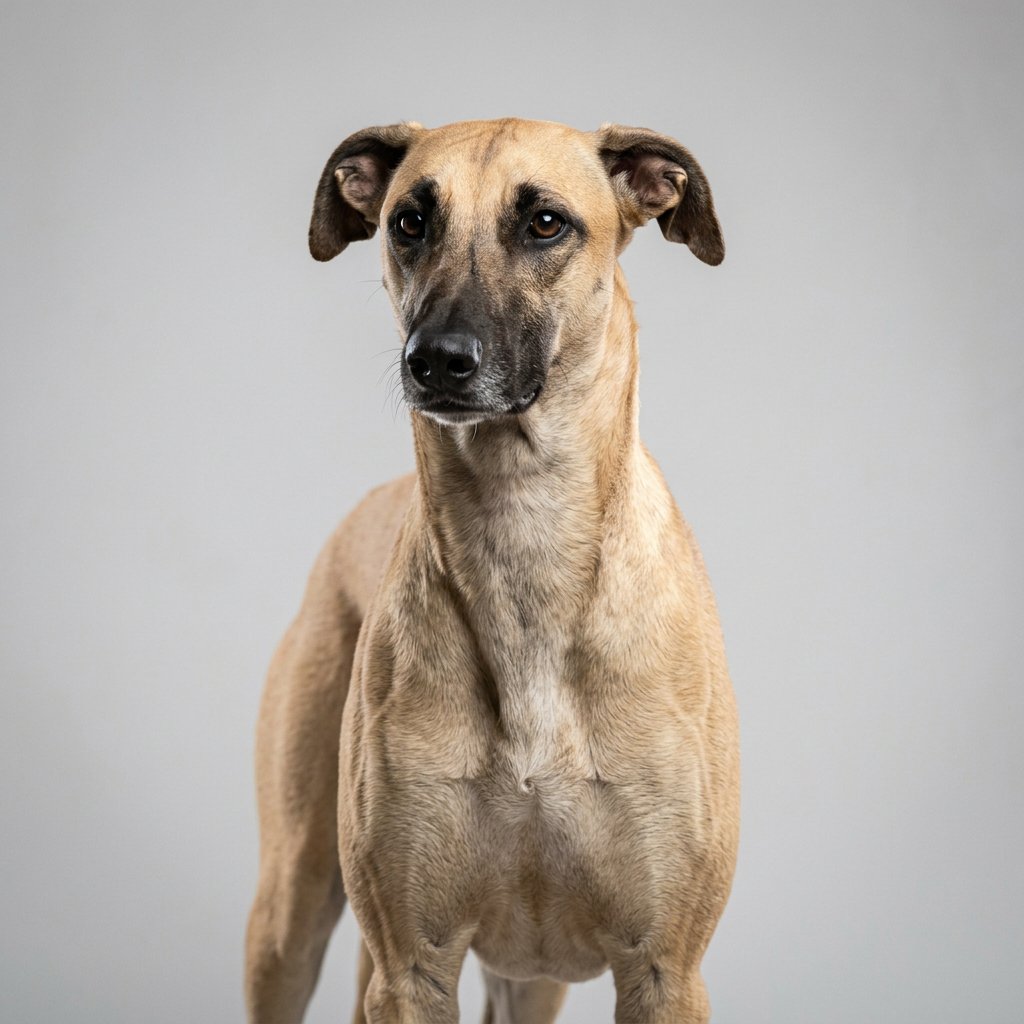
In book one the Assessor mocks Kusy, whose name means bobtailed and whose tail was accordingly short: "A greyhound without a tail is like a nobleman without an office." The Polish Greyhound has its tail. Long, carried low, with the tip curved upwards, like a sabre at the hip. The rest fits too. It is the largest and strongest of the short-haired sighthounds, up to eighty centimetres at the withers, self-assured, composed and brave. It does not force itself on strangers: it inspects a guest, takes note of him and goes back to its place. Its house and garden, on the other hand, it regards as its own in a way that is rare among sighthounds. An old Polish proverb says that a nobleman on his own homestead is the equal of a provincial governor, so it bows to no one and will not let a strange dog through the gate. It cannot stand being shouted at and remembers it for a long time. You do not give a nobleman orders, you ask him; asked politely, it usually agrees. For centuries it ran beside a horse. Today it runs beside a bicycle and gives no sign of having noticed the difference. The state still keeps an eye on it: to keep a sighthound in Poland you need a permit from the district governor, the starosta. The starosta happens to be an office from that same era, so in this one respect everything has stayed as it was.
Polish nobles addressed one another as "brother". The owner of a single cottage said it to the owner of ten villages and had every right to: one nobleman was the equal of another. That is where the Polish phrase for being on familiar terms with someone comes from. The Polish Greyhound is on exactly those terms with you. It does not gaze at you adoringly or come running at every nod; other breeds are for that, and they do it superbly. This one walks alongside. On the lead it keeps to your leg the way its ancestors kept to the stirrup: level, neither ahead of you nor behind. When you come home it does not dance in the hallway. It gets up, comes over, establishes that it is you and goes back to its place. But when things are going badly for you, it finds you by itself, whichever room you are in, and lies down beside you, though nobody called it. A servant has to be called. A brother comes on his own.
Old Polish hospitality had a motto that amounts to: put on a spread even if it ruins you. A guest was fed beyond one's means. A greyhound must not be. This is a dog with a fast metabolism that needs substantial, protein-rich food, but it also has a deep chest, and with that build gastric torsion is a real danger. So of all the old Polish customs leave it just one: the after-dinner nap. In its case an hour of calm after every meal is the vet's recommendation.
Day to day it looks like this:
- Two or three smaller meals at fixed times instead of one large one
- A complete food with a high proportion of animal protein, and for a dog that runs a lot, a more energy-dense one too
- For a puppy, a food for large breeds: it grows for a long time and this should not be hurried
- Body shape: ribs easy to feel under your fingers and a clear waist. It should be lean and muscular
Beyond the bowl it has a few matters of its own:
- Permit: the application is made at the district office, or in large cities at the city hall. It applies to all pedigree sighthounds and their crosses
- Anaesthesia: sighthounds tolerate some anaesthetic drugs poorly, so before every procedure remind the vet that this is a sighthound
- Heart: the breed is regarded as healthy, but some sources mention heart disease. It is worth asking for the heart to be listened to at the annual check-up
- Running: a chance to gallop every day in a fenced area. Outside it, a lead or a long line, because it takes off after anything that runs away
- Winter: it grows a dense undercoat for the cold, but its skin is thin and it chills quickly when standing still
- Other animals: with a cat it grew up with it lives in harmony. Someone else's cat in the street is another matter
The equal of a governor, as we already know, bows to no one: not to guests, not to neighbours, not even to the starosta. And yet in the evening, when the guests have gone and the house has fallen quiet, it gets up from its place, comes over and rests its forehead against your knees. It stands like that for a moment. This is not a bow. It is how equals once greeted each other.
In Old Polish the greeting was a single word, czołem: with the forehead.
See also: Greyhound, Whippet, Polish Hound
Most common health issues
Sudden distension and twisting of the stomach; a directly life-threatening condition requiring immediate veterinary care. The risk rises in large breeds with a deep chest. Warning signs include unproductive attempts to vomit, a bloated belly, and restlessness. It helps to split the daily portion into 2-3 smaller meals and to avoid intense exertion right after eating.
Sighthounds, the Polish Greyhound included, tolerate some anaesthetic drugs poorly, partly because they carry very little body fat. It is not a disease but a trait of this group of breeds that the vet must know about before a procedure: appropriately chosen anaesthesia allows for it safely. Before every anaesthetic, remind the vet that the dog is a sighthound. Diet plays no part here.
A group of conditions impairing heart function, whose risk increases with age. It's worth watching for declining fitness, coughing, shortness of breath, and reduced exercise tolerance. Keeping a lean build and a moderate, controlled sodium content in the diet ease the circulatory system, while omega-3 fatty acids support its work.
Health issues
3 most common conditions
Health issues
3 most common conditions
Sudden distension and twisting of the stomach; a directly life-threatening condition requiring immediate veterinary care. The risk rises in large breeds with a deep chest. Warning signs include unproductive attempts to vomit, a bloated belly, and restlessness. It helps to split the daily portion into 2-3 smaller meals and to avoid intense exertion right after eating.
Sighthounds, the Polish Greyhound included, tolerate some anaesthetic drugs poorly, partly because they carry very little body fat. It is not a disease but a trait of this group of breeds that the vet must know about before a procedure: appropriately chosen anaesthesia allows for it safely. Before every anaesthetic, remind the vet that the dog is a sighthound. Diet plays no part here.
A group of conditions impairing heart function, whose risk increases with age. It's worth watching for declining fitness, coughing, shortness of breath, and reduced exercise tolerance. Keeping a lean build and a moderate, controlled sodium content in the diet ease the circulatory system, while omega-3 fatty acids support its work.
Nutritional needs
Proper hydration for your dog
Proper hydration is essential for a dog's health. Dogs need constant access to fresh water, especially on hot days and after physical activity. Wet food can serve as an additional source of fluids.