Shiba Inu
Origin: Japan
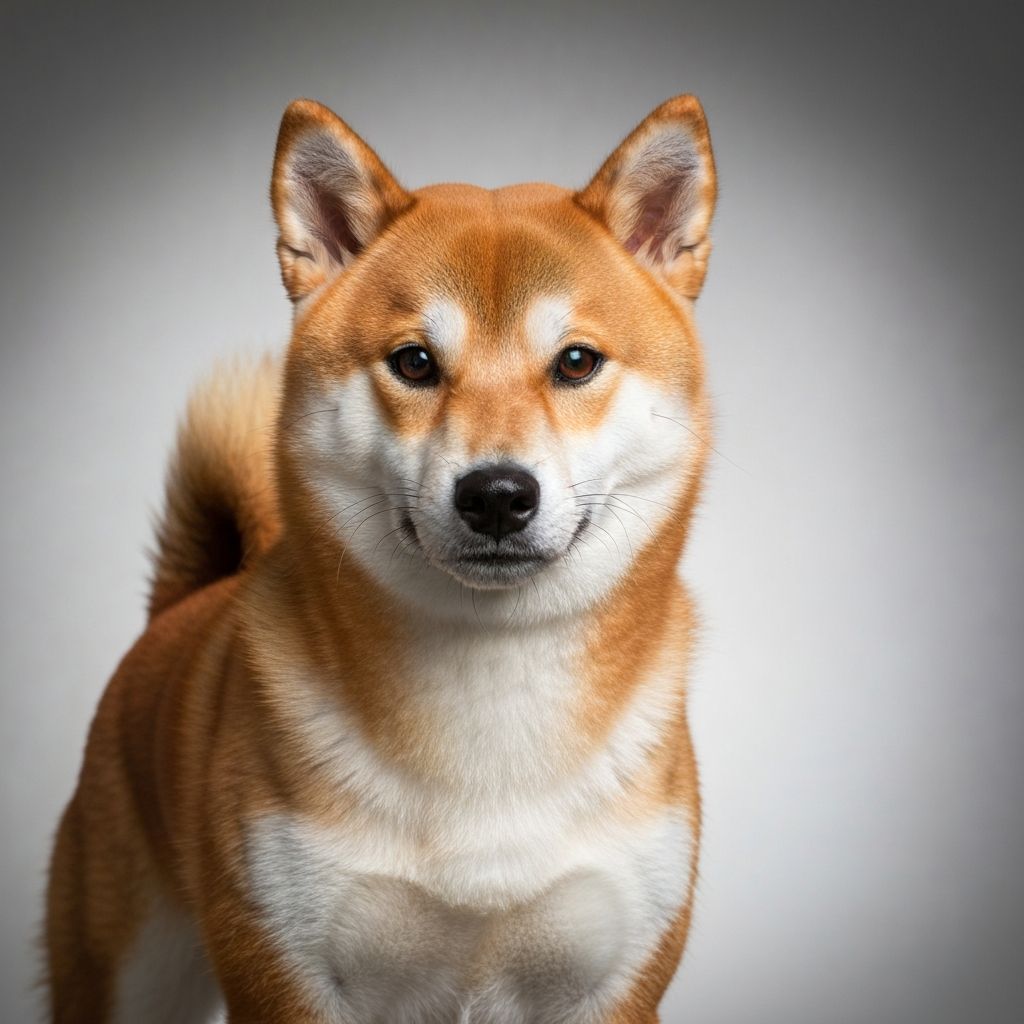
The shiba inu is essentially a cat that decided to pretend to be a dog — proud, independent, and deeply convinced that it's the one doing you a favor by living in your home.
The shiba inu is the smallest of Japan's native dogs and one of the oldest dogs in the world — an ancient tracker that for centuries roamed the mountainous forests of the Land of the Cherry Blossom, flushing out everything that rustled in the undergrowth. After World War II the breed nearly went extinct and was rebuilt from a handful of surviving dogs — thanks to which the shiba retained something very primal: that foxlike beauty of its, its alertness, and its absolute, unshakeable independence. Because although on paper it's a dog, deep down the shiba is a cat. Proud, self-sufficient, and deeply convinced that it's the one doing you a favor by consenting to live with you.
Life with a shiba is a never-ending course in humility for the owner. Asked to come, the shiba will first weigh the pros and cons of your proposal, assess whether it's really worth its while, and only then graciously make a decision — usually independent of yours. It also has in its repertoire something that has passed into legend as the “shiba scream”: a piercing, dramatic shriek, as if some indescribable wrong were befalling it, while you're attempting something as cruel as clipping a single one of its nails. And through all of this it's tidy almost like a cat — it keeps itself clean, loathes mud, and can look at a Labrador wallowing in a puddle with an expression of sincere distaste. On top of that come fits of frantic energy, the famous “shiba 500,” when our dignified samurai suddenly turns into a hurtling ball, does a few laps of the apartment, and then returns to its customary dignity as if nothing had happened.
There's something in this that only those who have truly come to love the breed understand. The shiba isn't a dog that will shower you with kisses and follow you like a shadow, begging for attention. Its affection is reserved, discreet, served up in the Japanese manner — without needless pathos. But that's exactly why each of its gestures means so much. When this independent, proud dog comes of its own accord and settles beside you; when, after a long day, it finds you with its eyes across the room; when, in its sparing style, it lets you know that you're its person — know that you've received something that had to be earned. The shiba's love isn't loud. It's real. And the trust of so independent a soul is one of the finest compliments that can befall a person.
At the bowl the shiba has its own very specific particularities, which you need to know about.
It's a breed clearly prone to allergies — both food-related and skin-related — so what you feed it has a real impact on its comfort and condition:
- A good-quality diet, and in case of problems a hypoallergenic or limited-ingredient one (best chosen together with a vet)
- Omega-3 fatty acids and ingredients supporting the skin and that dense, foxlike coat
- A portion that maintains the lean, compact figure of a nimble mountain runner — the shiba should be athletic, not plump
- Attention to possessiveness: the shiba can be quite protective of its bowl, so it's worth ensuring calm and space at mealtimes
Beyond diet, it's worth knowing a few of its traits and needs:
- Skin and allergies: watch for itching, scratch marks, and the state of the coat — with the shiba that's the most frequent area of problems
- Coat: twice a year it changes abundantly (shedding whole handfuls of undercoat), and otherwise it requires regular brushing
- Joints: as in many breeds, it's worth paying attention to the hips and kneecaps, responding early to limping
- Leash and fencing: a strong chase instinct means that, let off the leash, the shiba can take off after something fleeing and “forget” the way back — safety first
Because the shiba inu isn't a dog for someone who needs unconditional adoration on demand. It's a dog for someone who can appreciate character, independence, and that touch of feline aloofness — and who understands that the respect of such a dog is earned, not forced.
Give it a good, well-considered diet, take care of its skin and coat, respect its proud nature — and in return you'll get a companion full of dignity, character, and dry, foxlike humor. A dog that will never pretend it can't live without you — but that, quietly, in its reserved way, will let you know that it very much would rather not. Because the attachment of so proud, independent a soul can't be bought or forced. It can only be received — and that's precisely the most beautiful thing about life with a shiba.
See also: Akita Inu, Basenji, German Spitz
Most common health issues
An excessive immune system reaction to food or environmental allergens, causing itching, skin problems, or digestive issues. Identifying the trigger is key, often through an elimination diet. Foods with a limited number of ingredients and support with omega-3 fatty acids help calm the symptoms.
A congenital abnormality in which the head of the femur does not fit perfectly into the socket, over time leading to joint degeneration and pain. It mainly affects large and giant breeds, though it can occur in small ones too. Watch for reluctance to jump, a "bunny-hopping" gait, and stiffness after rest. A lean build and controlled exercise take pressure off the hips, while omega-3 fatty acids support the cartilage.
The kneecap slipping out of its proper groove, causing the knee to momentarily "skip" or lock. Very common in small and miniature breeds. A symptom can be periodic tucking-up of a hind leg while running and sudden, brief lameness. A lean build takes pressure off the joints, while supporting the cartilage with omega-3 fatty acids and the right calcium level promote knee stability.
Health issues
3 most common conditions
Health issues
3 most common conditions
An excessive immune system reaction to food or environmental allergens, causing itching, skin problems, or digestive issues. Identifying the trigger is key, often through an elimination diet. Foods with a limited number of ingredients and support with omega-3 fatty acids help calm the symptoms.
A congenital abnormality in which the head of the femur does not fit perfectly into the socket, over time leading to joint degeneration and pain. It mainly affects large and giant breeds, though it can occur in small ones too. Watch for reluctance to jump, a "bunny-hopping" gait, and stiffness after rest. A lean build and controlled exercise take pressure off the hips, while omega-3 fatty acids support the cartilage.
The kneecap slipping out of its proper groove, causing the knee to momentarily "skip" or lock. Very common in small and miniature breeds. A symptom can be periodic tucking-up of a hind leg while running and sudden, brief lameness. A lean build takes pressure off the joints, while supporting the cartilage with omega-3 fatty acids and the right calcium level promote knee stability.
Nutritional needs
Proper hydration for your dog
Proper hydration is essential for a dog's health. Dogs need constant access to fresh water, especially on hot days and after physical activity. Wet food can serve as an additional source of fluids.